EV Charging Without a Home Charger: How to Save in 2026
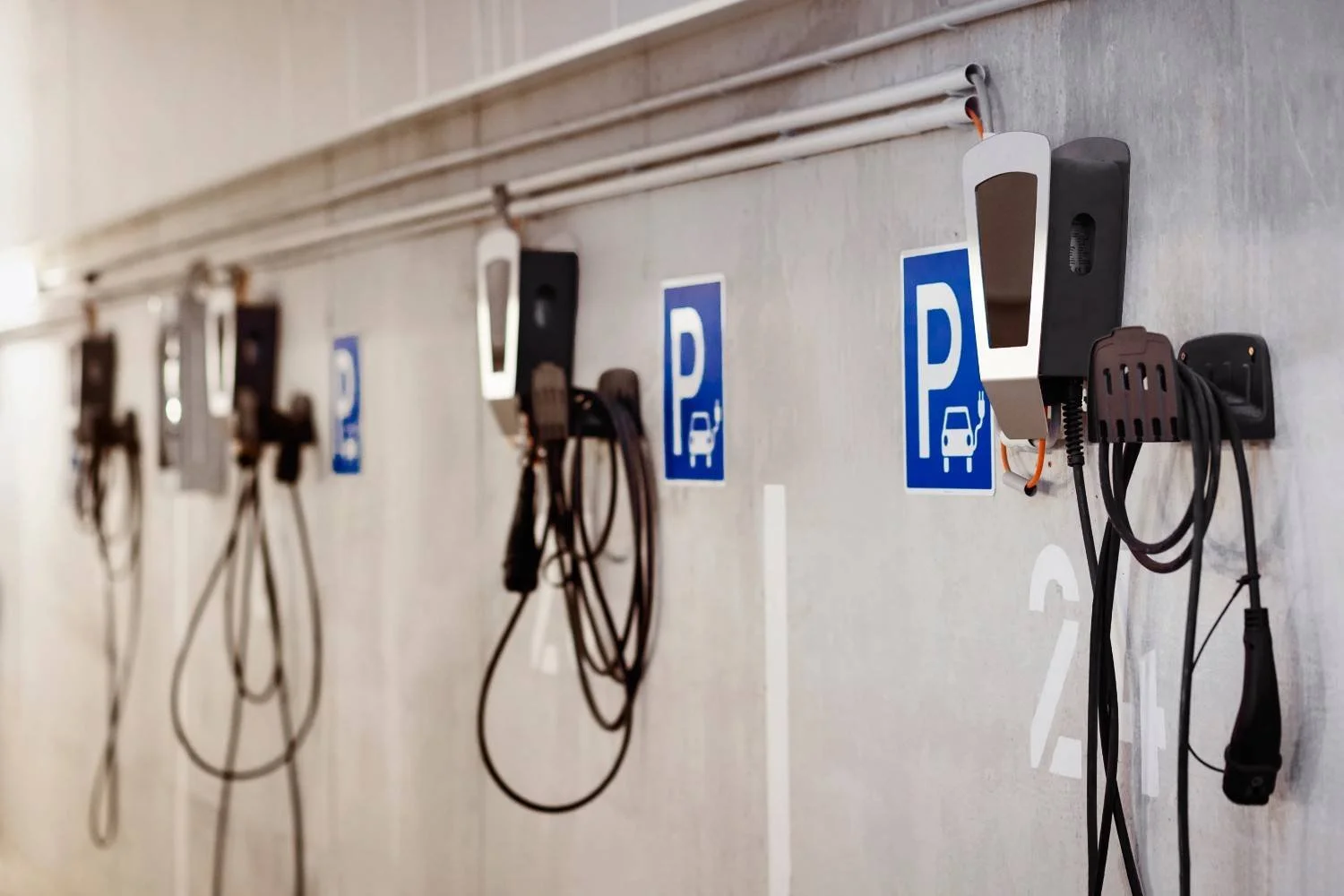
Source: Shutterstock
A large proportion of UK households cannot install a home charger. No driveway, no garage, no option. Yet charging costs rarely get the same attention as the car itself. You can save 20–50% on your car through your employer's salary sacrifice scheme, only to find that every public charge still comes out of your take-home pay at retail rates, taxed in full.
That is the driveway divide in practice. And for city drivers, renters, and flat-dwellers across the UK, it is a real and growing cost. The Charge Scheme exists to close that gap: by routing public charging costs through your gross salary, it delivers the same tax efficiency to your fuel as your employer's scheme delivers to your car.
In this guide, we’ll cover the cost disparity, the salary sacrifice mechanic that addresses it, and a worked savings calculation for public-only drivers. It also covers the network you can access, and practical advice on living well with an EV without access to home charging.
The Driveway Divide: Why Urban Drivers Pay More
According to Zapmap data analysed by Field Dynamics, around 32.8% of UK households (which works out to be approximately 9 million homes) don’t have access to a driveway or dedicated parking space. For those households, installing a home charger is not a decision to be made. It’s not a viable option.
This matters because home charging is, by a significant margin, the cheapest way to run an EV. Under the Ofgem price cap from April 2026, domestic electricity costs an average of 24.67p/kWh for drivers on a standard variable tariff. The weighted average PAYG price on the public network in February 2026, according to the Zapmap Price Index, was 54p/kWh on standard and standard-plus chargers, and 76p/kWh on rapid and ultra-rapid chargers of 50kW and above.
That is not a marginal difference. It is a gap of around 30p to 50p on every unit of electricity. For a driver covering 10,000 miles per year who relies entirely on public charging, that difference runs to hundreds of pounds in hidden costs annually, compounding across the life of a lease.
The problem has a second dimension beyond unit cost. Public charging carries a fourfold VAT penalty compared to home electricity: taxed at 20% versus 5% for domestic electricity. This disparity has attracted sustained pressure from campaigns such as FairCharge, but it remains in place in 2026. Every unit charged at a public charger carries a VAT surcharge that home-charging drivers never pay.
The outcome is a two-tier system. Drivers with driveways charge cheaply overnight and benefit from salary sacrifice savings on their car. Drivers without driveways pay more per kWh, pay more VAT, and (until The Charge Scheme), paid entirely from post-tax income.
Research from EVA England's 2025 Steer the Conversation survey found that among EV drivers without a driveway, only half reported their electric car as significantly cheaper to run than petrol or diesel, compared to 87% of those with access to home charging.
The salary sacrifice argument for the vehicle is identical whether or not you have a driveway. The same cannot be said for charging, without the right benefit in place!
Key Takeaways
Around 9 million UK households lack driveway access, per Zapmap
Public rapid charging averages 76p/kWh versus 24.67p/kWh at home
Public charging carries 20% VAT; home electricity is taxed at only 5%
Without salary sacrifice, every public charge is funded from post-tax income
How Your Employer Can Slash Your Public Charging Bills
Salary sacrifice works by reducing your gross pay before income tax and National Insurance are calculated. The cost of the benefit, whether that is a car, a pension contribution, or your EV charging, is deducted before HMRC takes its share. You pay for something you were going to pay for anyway, but in pre-tax pounds rather than post-tax.
The Charge Scheme extends this logic to EV charging for the first time. Rather than paying a public charge point operator directly from your debit card, your charging costs are processed through your employer's payroll. The deduction is applied to your gross salary before tax. HMRC receives less because your taxable income is lower.
The saving depends on your tax bracket. For a basic-rate taxpayer paying 20% income tax and 8% National Insurance, the combined saving on salary sacrifice is around 32% on every charge. For a higher-rate taxpayer, paying 40% income tax and 2% National Insurance, the saving is approximately 42%. An additional-rate taxpayer can save up to 50%.
What this means in practice
A 76p/kWh rapid charge session, which would otherwise cost you 76p from take-home pay, costs a higher-rate taxpayer effectively around 44p after the salary sacrifice saving is applied. On a meaningful annual mileage, that is a material difference.
There is no change to how you charge. You use The Charge Scheme RFID card or app at a public charge point in the usual way. The difference is entirely on the payment side: instead of a direct debit card transaction, the cost flows through payroll. There are no expense claims, no receipts to collect, and no reimbursement process to wait for.
For HR teams, the operational case is equally clear. The Charge Scheme is a bolt-on to any existing EV arrangement and requires no overhaul of current payroll or benefit structures. Employers benefit from reduced National Insurance contributions on the salary sacrificed, making the scheme a net positive that forward-thinking HR teams are increasingly recognising.
Key Takeaways
Salary sacrifice deducts charging costs from gross pay before tax
Basic-rate taxpayers save ~32%; higher-rate taxpayers save ~42% per charge
No expense claims, receipts, or reimbursement process is required
Employers also save on National Insurance contributions through payroll deductions
The £4,000 Saving Breakdown
The savings from salary sacrifice charging aren’t abstract. It can be modelled against real mileage and real network prices.
The worked examples below use the Zapmap Price Index rapid/ultra-rapid average of 76p/kWh (February 2026) and standard EV efficiency of approximately 3.5 miles per kWh, which is a reasonable baseline for mixed urban and motorway driving. These are PAYG rates. Membership pricing on certain networks can bring costs lower; these figures represent a conservative and common scenario for a driver without a home charger.
Annual mileage: 10,000 miles
| Without The Charge Scheme | Basic rate (32% saving) | Higher rate (42% saving) | |
|---|---|---|---|
| Annual kWh (public, rapid) | 2,857 kWh | 2,857 kWh | 2,857 kWh |
| Annual cost at 76p/kWh | £2,171 | £1,476 | £1,259 |
| Annual saving | – | £695 | £912 |
| 4-year saving | – | £2,780 | £3,648 |
Annual mileage: 12,000 miles
| Without The Charge Scheme | Basic rate (32% saving) | Higher rate (42% saving) | |
|---|---|---|---|
| Annual kWh (public, rapid) | 3,429 kWh | 3,429 kWh | 3,429 kWh |
| Annual cost at 76p/kWh | £2,606 | £1,772 | £1,511 |
| Annual saving | – | £834 | £1,095 |
| 4-year saving | – | £3,336 | £4,380 |
A higher-rate taxpayer covering 12,000 miles per year on the public network saves over £4,000 across a standard 4-year lease. A basic-rate taxpayer covering 10,000 miles saves close to £2,800 over the same period.
These figures cover public charging only, but it’s worth bearing in mind that The Charge Scheme also covers home and workplace charging. Drivers who charge across all three environments will see their total savings increase further still, depending on the split between charging locations.
One point worth noting on the VAT differential: The Charge Scheme doesn’t eliminate the 20% public charging VAT rate; that applies at the network level before any salary sacrifice calculation. What salary sacrifice does is offset a portion of that cost through your income tax and NI savings. For drivers without a home charger, it is the most effective mechanism currently available to reduce the real-terms cost of public charging.
Key Takeaways
A higher-rate taxpayer doing 12,000 miles/year saves over £4,000 in 4 years
A basic-rate taxpayer doing 10,000 miles/year saves approximately £2,800 over 4 years
Savings are based on Zapmap's February 2026 rapid charging average of 76p/kWh
Home and workplace charging savings are additional to the public charging figures above
Accessing 76,000+ Chargers with One Card
One of the practical difficulties of relying on the public network is fragmentation. The UK's charging infrastructure is built across dozens of separate operators, each with its own app, account, and pricing structure. A driver without a home charger who regularly uses BP Pulse, Shell Recharge, Pod Point, and a local authority on-street network is managing four separate accounts, four separate billing relationships, and four separate apps.
The Charge Scheme consolidates this. A single RFID card, delivered within 3–5 working days of enrolment, gives you access to 76,000+ charge points across the UK. The card works across major networks. You tap to start, tap or unplug to stop, and the cost is routed through payroll automatically. The Charge Scheme's coverage across the major operators means that whether you are charging at an on-street lamp-post unit on your road, a rapid hub at a retail park, or an ultra-rapid bay on the motorway, the same card applies and the same salary sacrifice saving is captured.
The app works alongside the card. While the RFID card handles the charge session itself, the app provides live session monitoring, usage history, and a record of your savings over time. It also shows real-time availability across the network, which is practical for any driver planning a route around public charging stops.
Key Takeaways
One RFID card accesses 76,000+ UK charge points across all major networks
Coverage includes BP Pulse, Shell Recharge, IONITY, Pod Point, and Tesla Superchargers
The app monitors sessions and tracks cumulative savings alongside the card
Card arrives within 3–5 working days; salary sacrifice savings apply from the first session
From "Petrol Station Habit" to "Charging Habit"
Drivers switching to an EV without home charging face a different mental model than those who wake up to a full battery every morning. Every mile needs to be planned consciously, at least until a new set of habits replaces the old ones. Most drivers who make the transition report that it takes a matter of weeks.
The shift is less dramatic than it sounds, for a practical reason: most journeys around a city or town are short. The average UK journey is just over 8 miles, and typical daily mileage rarely exceeds 20 miles. Modern EVs carry 280 miles of range or more. This means that even without overnight charging, you are unlikely to need to charge every day.
Build your anchor charge points
Identify the two or three locations you visit most often that have reliable charge points nearby: your workplace, the supermarket you use weekly, and the retail park you pass regularly. These become your default charging locations. Most charge sessions will happen at these places, not at random.
Use workplace charging where it exists
Many employers with EV salary sacrifice schemes have on-site charge points. If yours does, that is the cheapest and most convenient charging option available to you. The Charge Scheme captures workplace charging within the salary sacrifice arrangement automatically. If your employer does not yet have on-site chargers, it is worth raising: the workplace EV charging scheme landscape has improved considerably.
Charge to 80%, not 100%
On rapid and ultra-rapid chargers, charging speed drops noticeably above 80% as the battery management system protects cell chemistry. Stopping at 80% is faster per pound spent and better for long-term battery health. It is also cheaper per session, because you spend less time at the charger.
Use the Charge Scheme app to plan
The app shows live availability across the network, which is useful for identifying reliable charge points near your regular locations. Zapmap's reliability ratings for individual charge points are also worth checking before committing to an unfamiliar location. For drivers new to the public network, the app removes the guesswork.
Keep a cable in the boot
Not all chargers are tethered. Slower AC chargers in particular often require a Type 2 cable, which most EVs supply as standard. Keeping it in the boot means you can use any untethered charger you encounter without having to turn around.
Going electric without a home charger is a practical option in 2026, not a compromise. The infrastructure has matured, the costs can be managed through EV salary sacrifice charging, and the habits that make it work are straightforward.
Key Takeaways
Average daily UK driving is under 20 miles; most EVs carry 280+ miles of range
Regular charging locations like workplaces and supermarkets replace the overnight top-up
Charging to 80% is faster per pound and better for long-term battery health
Salary sacrifice makes public charging financially predictable, not just accessible
Ready to Close the Charging Divide?
An EV scheme that works for some employees and not others isn't delivering its full potential - for your workforce or your sustainability targets. The Charge Scheme is the bolt-on benefit that makes EV ownership genuinely cost-effective for every employee, regardless of where they live or how they charge.
For HR leaders: Find out how The Charge Scheme integrates with your existing car scheme, with zero additional employer cost and minimal setup overhead.
For employees: If your employer already runs an EV scheme, ask your HR or benefits team whether The Charge Scheme is available - and start saving 20–50% on every charge from day one.
Frequently Asked Questions About Charging Without a Home Charger
-
Yes. The Charge Scheme is specifically designed for drivers who rely entirely or primarily on the public network.
The salary sacrifice deduction applies to public charging costs in the same way it applies to home and workplace charging. You do not need a home charger to use the scheme. The only requirement is that your employer is enrolled and you have a compatible EV.
-
The Charge Scheme card works across 76,000+ charge points in the UK, covering all major networks including BP Pulse, Shell Recharge, IONITY, Pod Point, and Tesla Superchargers. You do not need separate accounts or cards for each network.
One card, authenticated via the app, handles billing across all compatible operators.
-
Your saving depends on your tax bracket and your annual mileage. Based on the Zapmap Price Index rapid/ultra-rapid average of 76p/kWh (February 2026), a basic-rate taxpayer doing 10,000 miles per year on the public network saves approximately £695 annually.
A higher-rate taxpayer covering 10,000 miles saves around £912 per year. At 12,000 miles, those figures rise to approximately £834 and £1,095 respectively.
-
You need The Charge Scheme app, which is free to download. The app is used alongside your RFID card: the card handles authentication at the charger, while the app provides live session monitoring, availability data across the network, and a record of your usage and savings.
For finding charge points and checking live availability, the app replaces the need for multiple network-specific apps.
-
The Charge Scheme covers public charging regardless of whether your employer has on-site charge points. Workplace charging is an additional benefit where it is available, but the scheme does not require it.
If your employer does have workplace charging and you use it, those sessions are captured within your salary sacrifice arrangement automatically.
-
You do not need to submit individual receipts. The Charge Scheme processes public charging costs automatically through the RFID card and app.
At the end of the month, you submit a single mileage reading, which the scheme uses to calculate your total charging costs across all locations. The process takes approximately 10 seconds. There are no manual expense claims.
-
The Charge Scheme covers charging for personal use, which is how the salary sacrifice saving is structured. If you also use your EV for business mileage, your employer can reimburse those miles separately at HMRC advisory fuel rates. The two processes are distinct: salary sacrifice covers your personal charging, and business mileage reimbursement is handled through your employer's standard expenses process.
For more on HMRC mileage rates for electric vehicles, the dedicated page covers the current advisory rates in detail.
Ready to save on every public charge?
If you are an employee without a home charger, The Charge Scheme is the most direct way to reduce your public charging costs. Check with your HR or benefits team to confirm the scheme is available, enrol through your salary sacrifice programme, and your card will arrive within 3–5 working days. Savings apply from your first session.
If you are an HR or benefits professional looking to extend your EV offering to employees who cannot charge at home, The Charge Scheme bolts directly onto your existing arrangement with minimal setup. Find out how The Charge Scheme works for employers, or visit the HR and benefits teams page for the full operational detail!




Last updated: 26/03/2026
Our pricing: is based on data collected from The Charge Scheme Calculator. All final pricing is inclusive of VAT. All deals are subject to credit approval and availability. All deals are subject to excess mileage and damage charges. Prices are calculated based on the following tax saving assumptions; England & Wales, 40% tax rate. The Charge Scheme is a product of The Electric Car Scheme™ – a trusted, trademarked brand dedicated to making electric driving more affordable. All rights reserved. The Electric Car Scheme is the trading style of The Electric Car Scheme Limited (company number 12646157, ICO number ZB030706, VAT number 439430195) and The Electric Car Scheme Holdings Limited (company number 13295877, ICO number ZB252629). Head office & registered address: The Shipping Building, 254 Blyth Road, Hayes, UB3 1HA. The Electric Car Scheme Limited provides services for the administration of salary sacrifice employee benefits. The Electric Car Scheme Holdings Limited is a member of the BVRLA (10608) is authorised and regulated by the FCA under FRN 968270, is an Appointed Representative of Marshall Management Services Ltd under FRN 667174, and is a credit broker and not a lender.
Copyright and Image Usage: All images used on this website are either licensed for commercial use or used with express permission from the copyright holders, in compliance with UK and EU copyright law. We are committed to respecting intellectual property rights and maintaining full compliance with applicable regulations. If you have any questions or concerns regarding image usage or copyright matters, please contact us at marketing@electriccarscheme.com and we will address them promptly.