EV Pay-Per-Mile Road Tax 2028: How to Offset the Costs
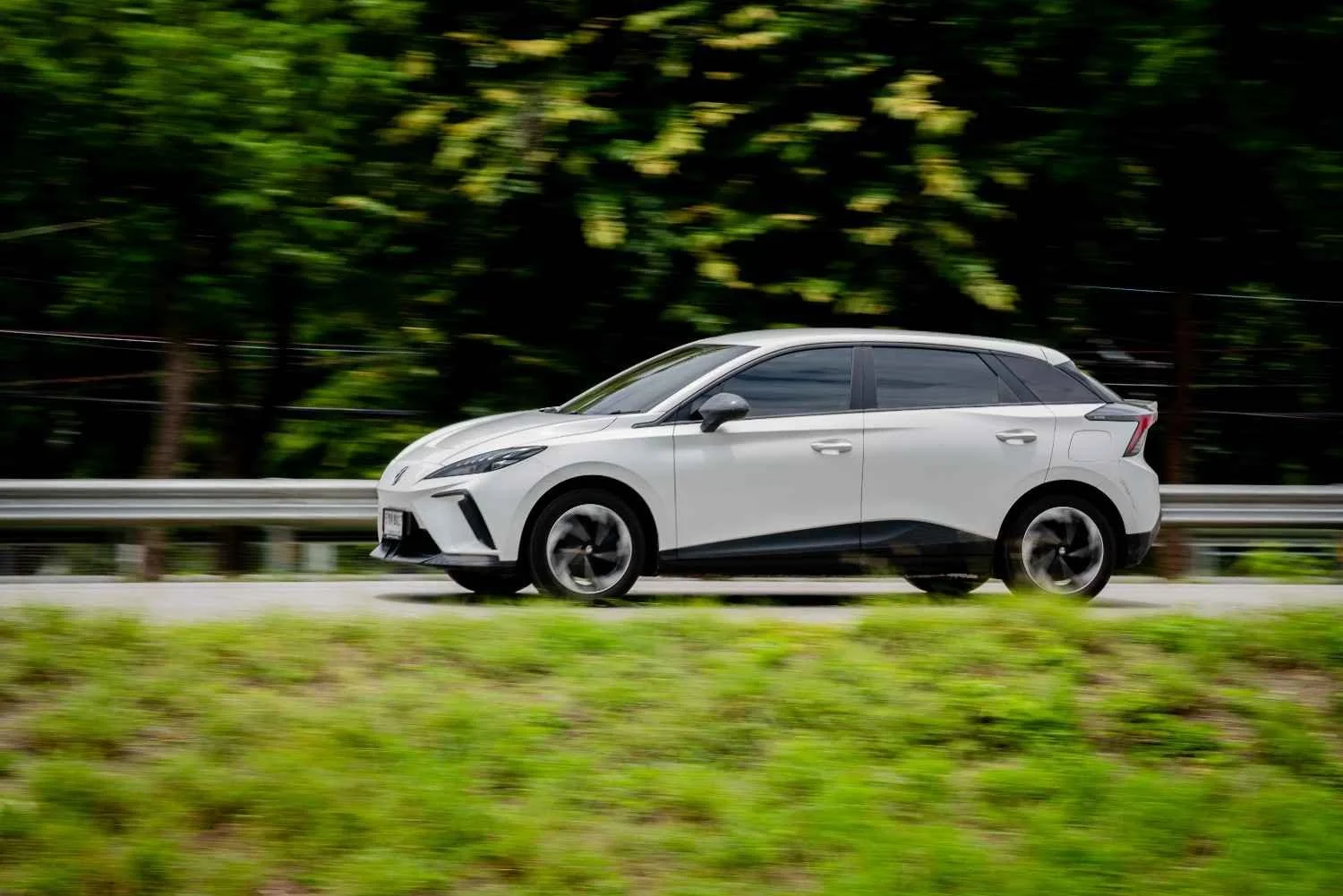
Source: Shutterstock
The government has confirmed that from April 2028, every electric car driver in the UK will pay eVED, electric Vehicle Excise Duty, a new mileage-based charge set at 3p per mile.
For a driver covering 10,000 miles a year, that is £300 added to their annual bill. For the average UK driver, at around 8,500 miles, it is closer to £255. Neither figure is catastrophic. But set against a backdrop of rising VED rates, a BiK increase for EV company cars, and electricity prices that remain high compared to pre-2022 levels, EV pay-per-mile road tax 2028 is adding to a picture of increasing EV running costs in the UK that drivers are watching closely.
The important distinction is this: eVED is unavoidable. What you pay to charge your car is not.
The most effective response to rising fixed motoring taxes is to reduce the variable costs you can control. For EV drivers, that means charging costs. Through The Charge Scheme, employees can pay for all their EV charging, covering home, workplace, and public sessions, from their gross salary before income tax and National Insurance are calculated, saving between 20% and 50% on every kWh they use. For many drivers, those charging savings will more than offset the annual cost of eVED.
This guide explains exactly how the 2028 EV pay-per-mile road tax works, how it sits within the broader picture of EV running costs in 2026, and how salary sacrifice charging can protect your wallet before the new tax arrives.
What Is the 2028 Pay-Per-Mile Road Tax?
Electric Vehicle Excise Duty (eVED) is a new mileage-based tax on battery electric and plug-in hybrid cars, announced at the UK's Autumn Budget 2025 and confirmed for introduction in April 2028. Administered by the DVLA and paid alongside standard Vehicle Excise Duty (VED), it sits on top of existing road tax rather than replacing it.
The rate is set at 3p per mile for fully electric vehicles. Plug-in hybrid drivers pay 1.5p per mile, reflecting the fact that PHEVs already contribute to road funding through fuel duty when running on petrol. Both rates will increase annually in line with CPI inflation from 2029-30 onwards.
For context, the equivalent fuel duty rate for petrol and diesel drivers is approximately 6p per mile. eVED is set at half that rate, a deliberate policy choice intended to maintain an incentive to switch to electric while ensuring all drivers contribute to road infrastructure funding. According to the GOV consultation document, fuel duty currently generates around £25 billion annually, a figure set to decline as EV adoption grows.
How will it be collected?
The system is designed to minimise administrative burden.
Drivers estimate their annual mileage when renewing their VED through the DVLA, pay upfront based on that estimate, then submit actual mileage at year-end for reconciliation, verified against MOT odometer records. No GPS trackers are required and there is no tracking of where or when you drive.
How Much Will EVED cost in practice?
The annual bill depends on how much you drive. At 3p per mile:
| Annual Mileage | Annual eVED Cost |
|---|---|
| 7,000 miles | £210 |
| 8,500 miles | £255 |
| 10,000 miles | £300 |
| 12,000 miles | £360 |
| 15,000 miles | £450 |
These figures will increase with CPI inflation from 2029-30. For drivers on longer contracts or salary sacrifice arrangements, building this trajectory into long-term cost planning is worthwhile.
What eVED is not
It’s worth being precise about what is changing. eVED is a new charge on top of standard VED, not a replacement for it.
Electric cars already pay the standard VED rate of £200 per year as of 2026/27
From 2028, the £200 annual VED continues, and eVED is added on top
Key Takeaways
eVED charges EV drivers 3p per mile from April 2028, set at half the petrol fuel duty rate
The DVLA administers payments via existing VED processes; no tracking devices are required
A driver covering 10,000 miles annually will pay £300 in eVED per year
eVED is added on top of standard VED at £200 per year, not in replacement of it
The Rising Cost of EV Ownership in 2026
eVED does not arrive in isolation. It is one part of a broader shift in how the UK taxes electric vehicles, a shift underway since April 2025, when EVs lost their VED exemption entirely and began paying road tax for the first time. Understanding the full picture helps drivers plan accurately rather than react to each change in turn.
VED: EVs now pay standard rates
From April 2026, the standard VED rate for most electric cars is £200 per year, the same rate paid by petrol and diesel drivers.
EVs registered from April 2026 with a list price over £50,000 also attract the Expensive Car Supplement of £425 per year for five years. The threshold for EVs is £50,000, compared to £40,000 for non-EVs, a concession that keeps many popular models below the threshold but affects drivers of higher-specification vehicles.
BiK: The rate has increased
From 6 April 2026, the Benefit-in-Kind (BiK) rate for zero-emission company cars rose from 3% to 4%, confirmed by HMRC for the 2026/27 tax year.
For a driver with a £35,000 EV, that means annual BiK tax increases from £1,050 to £1,400 at the higher-rate taxpayer level, still a fraction of the equivalent petrol car, which carries a BiK rate of 25-37% depending on emissions.
The direction of travel is clear, with rates scheduled to rise to 5% in 2027/28. Drivers evaluating the total cost of their EV charge scheme should factor future BiK trajectories into longer-term planning.
Electricity prices remain High
Ofgem set the average electricity unit rate at 24.67p/kWh for Q2 2026, down from its peak but still significantly above pre-2022 levels.
The VAT disparity between home and public charging compounds this for drivers relying on the public network: domestic electricity is taxed at 5% VAT, while public charging carries 20% VAT, a difference that adds roughly 9-10p per kWh to every rapid charge. For drivers without a driveway who depend primarily on public charge points, that premium is a recurring cost with no simple workaround under standard payment arrangements.
None of these changes individually makes EV ownership unaffordable. Together, they mean the gap between EV running costs and the costs drivers were initially sold on has narrowed. Managing the variable costs, primarily charging, has become more important, not less.
Key Takeaways
Standard EV VED is now £200 per year, rising with inflation annually from 2026/27
BiK for EV company cars increases from 3% to 4% from April 2026 and 5% in 2027/28
Ofgem electricity unit rate stands at approximately 24.67p/kWh in Q2 2026
The VAT disparity adds around 9-10p/kWh to every public rapid charge
Offsetting the Tax: How to Save Up to 50% on Your Charging
The logic of salary sacrifice is straightforward: instead of paying for something from net pay, after tax and National Insurance have already been deducted, you give up part of your gross salary in exchange for a benefit. You pay less tax on the same underlying cost, and the savings land directly in your pocket.
The Charge Scheme extends this principle specifically to EV charging. It is the UK's first and only salary sacrifice charging benefit, covering home, workplace, and public charging through a single arrangement integrated directly with your employer's payroll.
How Much Can I Save On Charging With Salary Sacrifice?
The savings depend on your tax bracket, because salary sacrifice reduces taxable income. Here is how it looks across the three income tax rates:
| Tax Bracket | Income Tax Rate | NI Rate | Combined Saving |
|---|---|---|---|
| Basic rate | 20% | ~12% | ~32% |
| Higher rate | 40% | ~2% | ~42% |
| Additional rate | 45% | ~2% | ~47-50% |
For a basic-rate taxpayer, the calculation is closer but still worthwhile. A 32% saving on £800 of annual charging costs produces £256 in tax savings, roughly equivalent to the eVED cost at average mileage and a meaningful contribution toward it at higher mileage.
how Does The Charge Scheme work?
Your employer deducts the cost of your charging from your gross salary before your payslip is processed. The result is that you pay less income tax and National Insurance on the same underlying spend. Monthly admin takes around 10 seconds: you submit a mileage reading at the end of the month, and the scheme calculates your charging costs automatically across home, workplace, and public sessions.
For public charging, you use The Charge Scheme RFID card, which provides access to 76,000+ charge points across the UK, including BP Pulse, Shell Recharge, and IONITY. The card arrives within 3-5 working days of enrolment and is included as part of your benefit setup at no additional cost.
No Benefit-in-Kind tax currently applies to employer-provided charging when structured correctly. This means the full salary sacrifice saving on charging costs is yours to keep. This is confirmed by HMRC guidance, though drivers should verify the current position applies to their specific arrangement.
Key Takeaways
Basic rate taxpayers save around 32% on all charging through salary sacrifice
Higher-rate taxpayers save approximately 42%, potentially exceeding their annual eVED cost
Monthly admin takes 10 seconds; one mileage submission covers all charging types
No BiK tax applies to employer-provided charging when structured correctly
Petrol and Diesel vs. EV in 2028: The Total Cost Comparison
One of the more useful questions to ask about eVED is not whether it makes EVs more expensive, but whether it changes the conclusion that EVs are cheaper than the alternative. Based on current data, it does not.
The comparison below is based on a mid-range family car: a 65kWh battery electric vehicle against a 1.5-litre petrol equivalent, driven 10,000 miles per year.
Fuel costs at current rates
At the current average home electricity rate of approximately 24.67p/kWh per Ofgem Q2 2026 and a typical EV consumption of around 3.5 miles per kWh:
EV home charging cost per mile: approximately 7p
Add eVED from 2028: 3p per mile
Total energy-equivalent cost per mile (EV, home charging, 2028): approximately 10p
For the petrol equivalent, at a current average pump price of approximately 150p/litre, the highest level since May 2024 according to RAC Foundation data, and typical real-world fuel economy of around 40mpg, current supply pressures in global oil markets mean petrol costs are running higher than the recent norm.
Petrol fuel cost per mile: approximately 18p, inclusive of fuel duty
Wider running cost factors
Fuel is not the only variable.
EVs carry lower servicing costs through simpler drivetrains, no oil changes, and reduced brake wear from regenerative braking.
The BiK differential also remains substantial: a petrol company car emitting 120g/km CO2 currently carries a BiK rate of 28%, against 4% for a zero-emission vehicle in 2026/27. That differential produces thousands of pounds in annual tax savings for company car drivers, which eVED does not come close to eliminating.
Drivers weighing up the full financial case will find that reducing EV running costs is more a question of active management than of fundamental economics shifting against EVs.
The VAT disparity remains
One cost that affects EV drivers disproportionately is the VAT differential on fuel. Domestic electricity is taxed at 5% VAT; public EV charging is taxed at 20%. Petrol and diesel are also taxed at 20% VAT, but the disparity becomes significant for EV drivers who cannot charge at home and rely primarily on the public network.
The government has not yet committed to equalising the rate. Salary sacrifice charging through The Charge Scheme does not eliminate the underlying VAT, but it does reduce the net effective cost through the gross salary mechanism, substantially improving the economics of public charging for those affected by the hidden costs of EV charging.
Key Takeaways
At home charging rates, EVs cost roughly 10p per mile to run, including eVED, versus ~18p for petrol
Salary sacrifice cuts the effective EV cost further, to around 7p per mile for higher-rate taxpayers
EV BiK rates remain well below petrol equivalents, maintaining the company car cost advantage
EVs retain a clear total cost advantage over petrol and diesel, even with eVED from 2028
Locking in Savings Today: Why Acting in 2026 Matters
eVED does not arrive until April 2028. That gives drivers, and the HR teams supporting them, a clear window to act. The practical case for starting a salary sacrifice charging arrangement now comes down to two things: accumulated savings and financial readiness.
Every month in 2026 and 2027 is a month of charging savings
The Charge Scheme is available now. From the moment you enrol, every pound spent on charging is paid from your gross salary rather than your net pay.
If your annual charging bill is £700 and you are a higher-rate taxpayer, you save approximately £294 per year, or around £24.50 per month. Over the 18 months from mid-2026 to the end of 2027, that produces £441 in cumulative savings before eVED even starts.
By the time April 2028 arrives, drivers who enrolled in 2026 will have already built a financial buffer. The eVED cost does not appear as a net increase to their overall motoring bill; it is absorbed into savings already being generated.
The bolt-on nature means no disruption
The Charge Scheme works as a bolt-on to your existing arrangements. Whether you are in an EV through a salary sacrifice car scheme, a personal lease, or a vehicle you own outright, there is no need to change anything about your current setup to add charging salary sacrifice. Your employer enrols in the scheme, and you receive your card within 3-5 working days. From your first session, savings apply automatically.
The employer case
For HR and benefits teams, the commercial case for acting now is equally clear.
Salary sacrifice charging reduces employees' gross pay, which means employers also save on National Insurance contributions. The scheme integrates with existing payroll arrangements, includes centralised reporting across all employees' charging activity, and carries no additional employer cost.
As eVED approaches and employees begin to focus on rising EV ownership costs, a proactive charging benefit is a meaningful addition to any package. HR and fleet managers looking at implementation will find the setup process is straightforward, with most employers able to go live within days.
Compatibility: what cars qualify
The Charge Scheme is compatible with any battery electric or plug-in hybrid vehicle, regardless of how it was obtained, including vehicles accessed through any EV salary sacrifice scheme, personal leases, or privately owned cars.
The only requirement is that your employer is enrolled. If they are not yet signed up, raising it with your HR or benefits team is the first step.
Key Takeaways
Starting in 2026 generates 18+ months of charging savings before eVED arrives in April 2028
The Charge Scheme bolts onto any car arrangement with no disruption to existing setups
Employers also save on National Insurance through reduced gross salary deductions
Compatible with any EV, regardless of how it was obtained or financed
Ready to Close the Charging Divide?
An EV scheme that works for some employees and not others isn't delivering its full potential - for your workforce or your sustainability targets. The Charge Scheme is the bolt-on benefit that makes EV ownership genuinely cost-effective for every employee, regardless of where they live or how they charge.
For HR leaders: Find out how The Charge Scheme integrates with your existing car scheme, with zero additional employer cost and minimal setup overhead.
For employees: If your employer already runs an EV scheme, ask your HR or benefits team whether The Charge Scheme is available - and start saving 20–50% on every charge from day one.
Frequently Asked Questions About EV Pay-Per-Mile Road Tax
-
eVED begins in April 2028, as confirmed in the UK's Autumn Budget 2025.
The GOV consultation, which closed in March 2026, is informing the final implementation details. Payments will be administered by the DVLA and integrated into existing VED renewal processes, making compliance as straightforward as possible for most drivers.
-
Battery electric vehicles will pay 3p per mile. Plug-in hybrid vehicles will pay 1.5p per mile. A driver covering 10,000 miles per year will pay £300 in eVED annually.
The rate will increase with CPI inflation from 2029-30 onwards. eVED is charged on top of standard VED, which stands at £200 per year for most electric cars from 2026/27.
-
It depends on your tax bracket and your total annual charging spend. A higher-rate taxpayer saving 42% on £800 of annual charging costs through The Charge Scheme saves £336 per year, more than the £255 eVED cost at average mileage. For a basic-rate taxpayer saving 32% on the same spend, the saving of £256 comes close to covering average eVED costs. The greater your annual charging spend, the larger the salary sacrifice saving relative to the fixed eVED charge. Drivers wanting to understand the full mechanics of what salary sacrifice charging involves will find the breakdown of home, work, and public savings useful.
A higher-rate taxpayer covering 10,000 miles saves around £912 per year. At 12,000 miles, those figures rise to approximately £834 and £1,095 respectively.
-
Yes. The Charge Scheme covers home, workplace, and public charging through a single arrangement. For home and workplace charging, you submit a monthly mileage reading, approximately 10 seconds of admin, and the scheme calculates your costs automatically.
For public charging, you use The Charge Scheme RFID card across 76,000+ UK charge points. All charging costs are deducted from your gross salary before tax is applied.
For finding charge points and checking live availability, the app replaces the need for multiple network-specific apps.
-
From April 2026, the standard VED rate for electric cars increases to £200 per year, up from £195 in 2025/26. The BiK rate for zero-emission company cars rises from 3% to 4% for the 2026/27 tax year, with a further increase to 5% in 2027/28 already confirmed by HMRC. The Expensive Car Supplement threshold for EVs rises from £40,000 to £50,000, meaning many popular electric models avoid the additional £425 annual charge.
Drivers looking at whether 2026 is the right time to implement an EV charging benefit will find the wider tax context relevant to that decision.
-
Yes. The BiK rate for zero-emission vehicles rises from 3% to 4% from 6 April 2026, and is scheduled to increase to 5% in 2027/28. Despite these increases, EV BiK rates remain significantly below petrol and diesel equivalents: a petrol car emitting 120g/km CO2 carries a BiK rate of 28%.
The cost advantage of a zero-emission company car remains substantial, particularly when salary sacrifice charging further reduces the net cost of powering it.
The Bigger Picture: EV Ownership Still Makes Financial Sense
The arrival of eVED is not a reason to reconsider going electric. It is a reason to be more deliberate about managing the costs within your control. Each tax change since 2025 has narrowed the gap between EVs and combustion engine cars on paper, but none has eliminated it.
At current fuel prices, an EV driven on home electricity still costs roughly half as much per mile as a petrol equivalent, even with eVED included. For company car drivers, the BiK differential alone continues to produce savings that dwarf the new charge. What eVED changes is the importance of actively managing charging costs rather than treating them as a fixed background expense.
Salary sacrifice charging is the most direct mechanism available to offset that exposure. Every month in place before April 2028 is a month of savings banked against a cost that has not yet arrived. For HR teams, it addresses a gap employees are increasingly aware of, at no additional employer cost, and sits naturally within any strategy to future-proof benefits ahead of the 2030 ZEV mandate.




Last updated: 28/03/2026
Our pricing: is based on data collected from The Charge Scheme Calculator. All final pricing is inclusive of VAT. All deals are subject to credit approval and availability. All deals are subject to excess mileage and damage charges. Prices are calculated based on the following tax saving assumptions; England & Wales, 40% tax rate. The Charge Scheme is a product of The Electric Car Scheme™ – a trusted, trademarked brand dedicated to making electric driving more affordable. All rights reserved. The Electric Car Scheme is the trading style of The Electric Car Scheme Limited (company number 12646157, ICO number ZB030706, VAT number 439430195) and The Electric Car Scheme Holdings Limited (company number 13295877, ICO number ZB252629). Head office & registered address: The Shipping Building, 254 Blyth Road, Hayes, UB3 1HA. The Electric Car Scheme Limited provides services for the administration of salary sacrifice employee benefits. The Electric Car Scheme Holdings Limited is a member of the BVRLA (10608) is authorised and regulated by the FCA under FRN 968270, is an Appointed Representative of Marshall Management Services Ltd under FRN 667174, and is a credit broker and not a lender.
Copyright and Image Usage: All images used on this website are either licensed for commercial use or used with express permission from the copyright holders, in compliance with UK and EU copyright law. We are committed to respecting intellectual property rights and maintaining full compliance with applicable regulations. If you have any questions or concerns regarding image usage or copyright matters, please contact us at marketing@electriccarscheme.com and we will address them promptly.