Public EV Charging VAT Cut to 5%: What It Means for The Charge Scheme
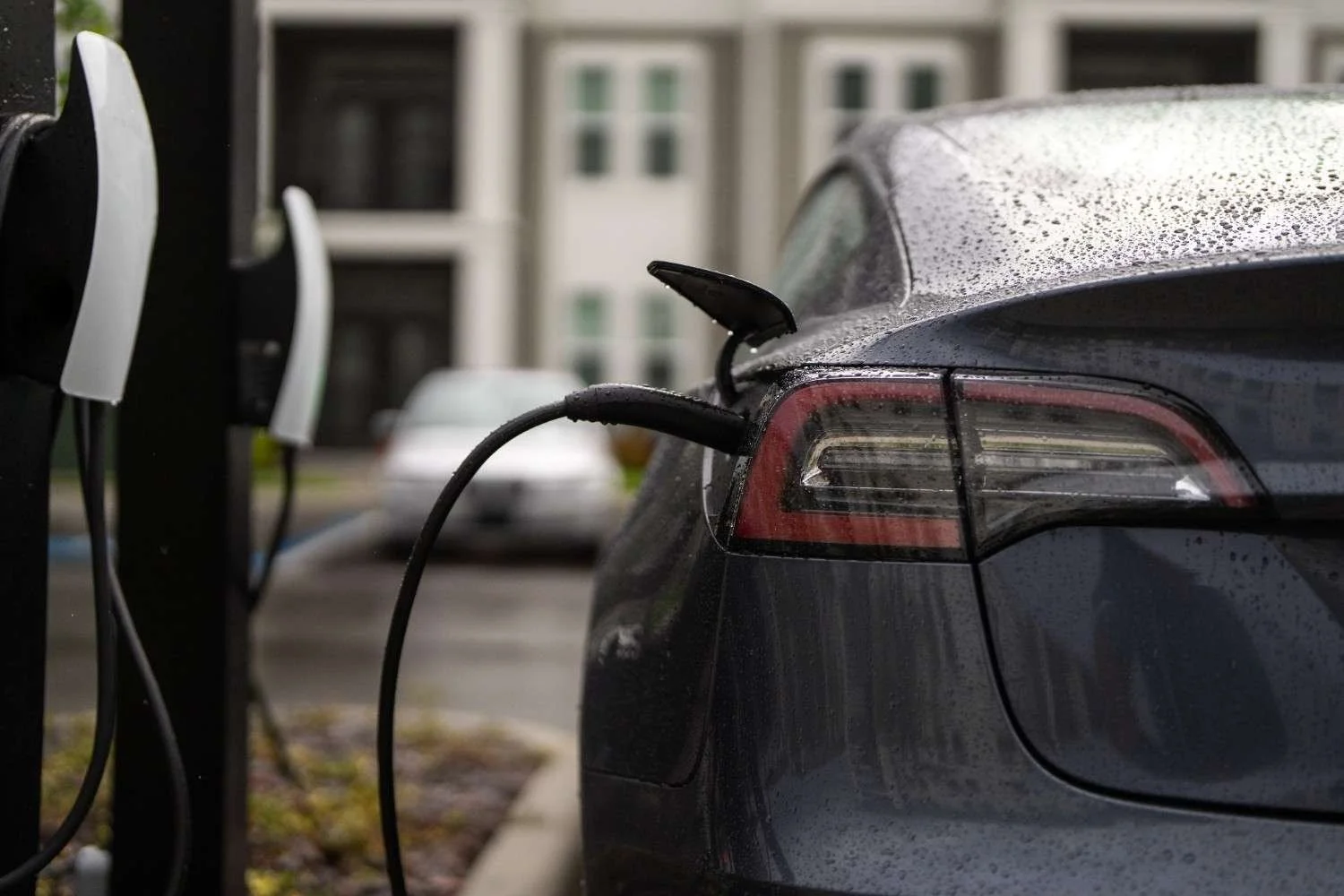
Source: Shutterstock
For years, UK drivers who couldn’t charge at home paid a penalty for it. Not through any deliberate policy, but through a quirk of VAT law that applied the full 20% standard rate to public EV charging while home electricity attracted only 5%. The electricity was identical. The VAT treatment was not.
That disparity has now been challenged directly. In February 2026, the First-tier Tribunal issued its judgment in Charge My Street Ltd v HMRC [2026], ruling that public EV charging already qualifies for the 5% reduced VAT rate under existing UK law.
For salary sacrifice EV drivers, the implications are significant. The Charge Scheme already cuts your public charging costs by 20-50% by routing payments through your gross salary. If (and when) the VAT ruling takes full effect, that saving will stack on a lower base price, making public charging cheaper than it has ever been!
This article explains what the tribunal actually ruled, what it means for your charging costs, and how The Charge Scheme positions you to benefit fully, both now and once the VAT reduction flows through to prices.
The 2026 VAT Ruling Explained
Charge My Street brought the case that triggered this ruling. This community benefit installs and operates public EV charge points, primarily in rural and underserved areas of northern England. Charge My Street challenged HMRC's position that public EV charging should always attract the standard 20% VAT rate.
HMRC had argued for years that the reduced 5% rate applied only to electricity supplied to a person's home or other fixed premises, and that ad hoc electricity supplied at public charge points fell outside that provision.
Charge My Street, advised by Deloitte and represented by Sarabjit Singh KC, argued otherwise. Its case rested on the "de minimis" provision in Note 5(g), Group 1, Schedule 7A of the Value Added Tax Act 1994.
That provision states that electricity supplied to a person at any premises at a rate of 1,000kWh per month or less qualifies as a domestic supply, attracting the 5% reduced rate. The argument was straightforward: an individual EV driver charging at a public charge point would have to charge almost continuously at the same location throughout an entire month to come close to that 1,000kWh threshold. In practice, it is virtually impossible to exceed.
The First-tier Tribunal agreed. In its judgment, published on 26 February 2026, the tribunal ruled that public EV charging qualifies for the 5% reduced rate where the electricity supplied per customer at a particular location does not exceed 1,000kWh per month. In the tribunal's own view, exceeding that threshold would be "nigh on impossible" for an individual driver. Deloitte's Oliver Jarratt described the outcome as "clear, unequivocal and a thumping victory for Charge My Street."
What the ruling does not yet do
It’s important to be precise about what the ruling means now. The judgment isn’t the same as a confirmed, immediate price reduction across the public network. HMRC has stated it is "carefully considering the decision" and has not confirmed whether it will appeal. Until HMRC confirms it will not pursue an appeal, or until a higher court upholds the ruling, charge point operators are not obliged to adjust their tariffs.
For planning purposes, drivers should budget on current public charging rates and monitor HMRC's position as it develops. The ruling establishes clearly that the legal framework supports the 5% rate. Whether and when that framework is applied consistently across all operators depends on what follows.
Matt Waller, General Manager of The Charge Scheme, welcomed the judgment:
“For too long, drivers without a driveway have been penalised by a VAT system that charges them four times more than homeowners for exactly the same electricity. This ruling confirms what the industry has argued for years, and HMRC must now apply the 5% rate across all public charging without delay rather than dragging this through an appeal.”
Key Takeaways
The February 2026 ruling found 5% VAT should apply to public EV charging
The de minimis threshold of 1,000kWh per month per location is practically impossible to exceed
HMRC is considering its response and may yet appeal the decision
Drivers should budget on current rates until operators confirm adjusted pricing
Stacking the Savings: VAT Reduction and Salary Sacrifice Combined
Even before the tribunal ruling, The Charge Scheme was already the most cost-effective way to pay for public EV charging in the UK.
The reason is salary sacrifice: by routing your charging costs through your gross salary, before income tax and National Insurance are applied, you reduce what you actually pay per kWh, regardless of the network price shown at the charger.
The savings by tax bracket:
Basic rate taxpayers (20% income tax, 8% National Insurance): approximately 32% saving on every charge
Higher rate taxpayers (40% income tax, 2% National Insurance): approximately 42% saving
Additional rate taxpayers: up to 50% saving
According to Zapmap's February 2026 price index, the weighted average PAYG price for rapid and ultra-rapid charging (50kW and above) is 76p/kWh. Here is what that looks like with salary sacrifice applied:
| Tax bracket | Standard 76p/kWh | Effective cost with The Charge Scheme |
|---|---|---|
| Basic rate (~32% saving) | 76p/kWh | ~52p/kWh |
| Higher rate (~42% saving) | 76p/kWh | ~44p/kWh |
| Additional rate (up to 50% saving) | 76p/kWh | ~38p/kWh |
Now consider what happens when the VAT ruling takes full effect. According to ChargeUK (the trade body representing charge point operators), the VAT disparity currently adds approximately 9.5p per kWh to rapid and ultra-rapid charging costs. Reducing VAT from 20% to 5% would bring the base cost down before the salary sacrifice saving is applied. The effect of these savings is cumulative: a lower starting price, reduced further by pre-tax deductions.
For a higher-rate taxpayer, the combination would bring the cost of rapid charging to a level broadly comparable to the home charging rates available on standard domestic tariffs today, without needing an overnight EV tariff or a driveway. That is a material shift in the economics of public charging.
The Charge Scheme doesn’t wait for VAT reform to deliver savings
The salary sacrifice saving through The Charge Scheme is available to you now, at current rates, regardless of where the VAT ruling lands.
The 76p/kWh headline price is what pay-as-you-go drivers see. The Charge Scheme routes your charging cost through payroll, so you access a 20-50% reduction on whatever the network charges, applied automatically and without any action on your part beyond your monthly 10-second mileage submission.
Key Takeaways
Basic rate taxpayers save approximately ~32%; higher rate taxpayers save ~42% per charge
Zapmap's February 2026 data confirms that rapid charging averages 76p/kWh PAYG
VAT reduction would lower the base cost before salary sacrifice is applied
The Charge Scheme delivers savings now, at current rates, with no dependency on VAT reform
Ending the "Driveway Penalty": What This Means for Drivers Without Off-Street Parking
The term "Driveway Penalty" has been used by campaigners for several years to describe the structural disadvantage faced by drivers who cannot charge at home. The mechanism is simple: home electricity for EV charging has always attracted 5% VAT. Public charging, which is the only option for drivers without off-street parking, has attracted 20%. The same electricity, delivered to your battery, was taxed at four different rates depending on where you happened to live.
According to ZapMap, nine million households in Great Britain do not have space to park and charge off-street. These are predominantly urban renters and flat dwellers, often in older terraced housing built long before car ownership, let alone EV charging, was a design consideration. In major cities, the proportion without off-street parking rises significantly: in dense urban areas, the figure can exceed 60%.
These drivers are not edge cases. They represent a substantial portion of the UK's current and potential EV driving population. For them, public charging is not an occasional top-up or a motorway convenience. It is their primary fuelling method, and the 20% VAT rate has made it significantly more expensive than it needed to be.
Why salary sacrifice matters more for this group
For drivers without a driveway, The Charge Scheme is not a way to squeeze a bit more value from an occasional public charge. It’s a way to make public charging financially viable. The 20-50% saving applied through gross salary deduction is the difference between public charging feeling expensive and public charging feeling rational. Combined with the VAT ruling moving in the right direction, the financial case for going electric without a home charger is stronger in 2026 than at any previous point.
The Charge Scheme also includes home and workplace charging, too, routed through the same payroll deduction. For drivers who do have some access to charging, whether through a workplace scheme or a shared residential unit, the benefit extends across every session. Reducing your overall EV running costs goes further still when salary sacrifice is applied across every charge type.
Key Takeaways
Approximately 46% of UK households lack off-street parking
These drivers have paid four times more VAT on charging than home chargers
Urban renters and those living in flats are most affected by the Driveway Penalty
Salary sacrifice through The Charge Scheme is best solution available now
The 2026 Public Charging Landscape: What to Expect from BP Pulse, Shell Recharge, and Ionity
The tribunal ruling has practical implications for every major network in the UK, but the timeline for price changes is not yet clear. Here is what is currently known about where the major operators stand and what drivers should reasonably expect.
The current pricing picture
Zapmap's February 2026 price index confirms that the weighted average PAYG price for rapid and ultra-rapid charging sits at 76p/kWh. This figure includes Tesla Supercharger data from April 2025, following Tesla's provision of a live data feed to Zapmap. Some networks are priced above this average, with IONITY at approximately 79p/kWh for ultra-rapid sessions. Others sit below: Believ at approximately 66p/kWh and Sainsbury's Smart Charge at approximately 72p/kWh.
The VAT embedded in these prices is currently calculated at 20%. Reducing it to 5% would reduce the VAT component from approximately 12.7p/kWh to approximately 3.2p/kWh on a 76p/kWh charge, a reduction of approximately 9.5p/kWh in the tax component. Whether BP Pulse, Shell Recharge, IONITY, and other operators pass this through in full, in part, or retain it within their margin will be a commercial decision for each network, and one they are unlikely to make until HMRC's position is settled.
What to watch for
HMRC's statement that it is "carefully considering the decision" suggests a response is pending. The most likely outcomes are:
HMRC accepts the ruling and issues revised guidance to operators, triggering a pricing review across the network
HMRC finds permission to appeal, which would delay implementation until a higher court rules
HMRC issues a legislative clarification, which would require parliamentary action but would provide the most durable resolution
Legal commentators have noted that the tribunal rejected HMRC's arguments clearly and unequivocally, which many experts believe makes a successful appeal unlikely. It’s worth noting that the Charge Scheme RFID card works across the full public network throughout this period, regardless of how individual operators respond to the ruling.
Why The Charge Scheme Saves You Money Either Way
The practical reality is that the VAT ruling outcome does not change the value of being on The Charge Scheme.
Whether the ruling leads to an immediate price reduction, a delayed one, or a legislative process lasting months, The Charge Scheme's salary sacrifice integration continues to apply a 20-50% saving on whatever price the network charges. Your saving is applied through payroll, automatically, from your next session!
For drivers currently paying PAYG rates at rapid chargers, moving to The Charge Scheme is the most direct action available to reduce your charging costs now. The VAT ruling is a structural improvement for the whole market, but salary sacrifice EV charging is a personal financial decision you can make today!
Key Takeaways
Rapid charging averages 76p/kWh PAYG in February 2026, per Zapmap
A 5% VAT rate would reduce the embedded tax component by approximately 9.5p/kWh
Operators will not adjust prices until HMRC confirms its position on appeal
The Charge Scheme delivers savings now, independent of the VAT outcome
Public EV Charging VAT: Frequently Asked Questions
-
Under the First-tier Tribunal's February 2026 ruling in Charge My Street Ltd v HMRC [2026] TC09802, the 5% reduced VAT rate applies to public EV charging where the electricity supplied to a single customer at a particular location does not exceed 1,000kWh per month.
The tribunal considered it virtually impossible for an individual driver to exceed this threshold at any single public charge point. In principle, the ruling therefore applies across the network, from slow kerbside chargers to ultra-rapid motorway hubs. However, the ruling is not yet universally in force.
HMRC is considering whether to appeal, and charge point operators have not yet adjusted their tariffs. Until HMRC confirms its position, drivers should assume the 20% rate remains in effect at the point of charging.
-
At current PAYG rates for rapid charging (76p/kWh, per Zapmap's February 2026 data), charging 50kWh costs approximately £38.
If the VAT rate reduces from 20% to 5%, the embedded VAT component falls by approximately 9.5p/kWh, bringing the equivalent cost to approximately £33 for the same charge, a saving of around £5 per session.
For drivers using The Charge Scheme, the salary sacrifice saving applies on top of the network price, delivering a further 20-50% reduction through gross salary deduction, depending on your tax bracket.
-
Backdated refunds, if any, would flow to charge point operators rather than individual drivers directly. Operators who have accounted for VAT at 20% on qualifying supplies may submit error correction notifications to HMRC for the last four years, though these are treated as protected claims while the possibility of an appeal remains open.
Whether operators pass any recovered VAT through to customers, and how, is a commercial decision for each network. As an individual driver, you do not have a direct mechanism to reclaim VAT charged at the higher rate. If you believe you have a specific claim, take independent tax advice.
-
Home charging on a standard variable domestic tariff currently costs approximately 24-28p/kWh, depending on your tariff and when you read this.
Even if public rapid charging reduces from 76p/kWh to approximately 66p/kWh following a VAT reduction to 5%, home charging will remain significantly cheaper on a standard tariff. The gap narrows considerably when salary sacrifice is applied through The Charge Scheme: a higher-rate taxpayer using The Charge Scheme at current rapid rates effectively pays approximately 44p/kWh.
With the VAT reduction applied, the effective cost falls further still. For drivers on specialist overnight EV tariffs, where home charging can be as low as 7-10p/kWh, public charging remains more expensive regardless.
The Charge Scheme covers both home and public charging through the same salary sacrifice arrangement.
-
The First-tier Tribunal ruled that the 5% rate already applies under existing UK VAT legislation. This is not a new exemption or a temporary government concession. It is a legal interpretation of the law that has been on the statute book since 1994.
Whether HMRC appeals and whether Parliament subsequently legislates to clarify or reverse the position remains to be seen.
For now, the most accurate description is that the 5% rate has been determined by the tribunal to be legally correct under existing law, and that determination stands unless overturned on appeal or superseded by legislation.
The salary sacrifice saving applies to your home charging in the same way as it does to public charging.
-
Low tyre pressure increases rolling resistance - the resistance the motor has to overcome to keep the car moving at speed.
The higher the rolling resistance, the more energy the motor uses per mile. Keeping tyres at the manufacturer-recommended pressure minimises rolling resistance and helps you extract the maximum range from each charge.
-
On a standard flat-rate tariff, the cost per kWh is the same regardless of when you charge. On a time-of-use or EV-specific tariff, off-peak windows - typically overnight, between around 11pm and 6am - offer the lowest available rates.
If you're on a flat-rate tariff, switching to an EV-specific time-of-use tariff is likely to produce meaningful savings, particularly if you charge regularly at home.
Charge Smarter, Regardless of What HMRC Decides
The tribunal ruling is a significant step toward a fairer public charging market. Whether it flows through to lower prices next month or after a period of legal process, the direction is clear: the case for 20% VAT on public EV charging has been rejected by the courts under existing law.
In the meantime, The Charge Scheme is the most direct way to reduce your public charging costs today. One card, access to 76,000+ charge points across the UK, and a salary sacrifice saving of 20-50% applied automatically through your employer's payroll. No waiting for HMRC guidance.
If you are an employee who wants to start saving on every charge, find out how The Charge Scheme works for drivers.
If you are an HR manager looking to give your team access to the UK's most cost-effective charging solution, see how The Charge Scheme works for employers.




Last updated: 26/03/2026
Our pricing: is based on data collected from The Charge Scheme Calculator. All final pricing is inclusive of VAT. All deals are subject to credit approval and availability. All deals are subject to excess mileage and damage charges. Prices are calculated based on the following tax saving assumptions; England & Wales, 40% tax rate. The Charge Scheme is a product of The Electric Car Scheme™ – a trusted, trademarked brand dedicated to making electric driving more affordable. All rights reserved. The Electric Car Scheme is the trading style of The Electric Car Scheme Limited (company number 12646157, ICO number ZB030706, VAT number 439430195) and The Electric Car Scheme Holdings Limited (company number 13295877, ICO number ZB252629). Head office & registered address: The Shipping Building, 254 Blyth Road, Hayes, UB3 1HA. The Electric Car Scheme Limited provides services for the administration of salary sacrifice employee benefits. The Electric Car Scheme Holdings Limited is a member of the BVRLA (10608) is authorised and regulated by the FCA under FRN 968270, is an Appointed Representative of Marshall Management Services Ltd under FRN 667174, and is a credit broker and not a lender.
Copyright and Image Usage: All images used on this website are either licensed for commercial use or used with express permission from the copyright holders, in compliance with UK and EU copyright law. We are committed to respecting intellectual property rights and maintaining full compliance with applicable regulations. If you have any questions or concerns regarding image usage or copyright matters, please contact us at marketing@electriccarscheme.com and we will address them promptly.